Showing posts with label bestseller. Show all posts

Monday, January 7, 2013

Mockingjay

Original image at suzannecollinsbooks.com/
Title: Mockingjay
Author: Suzanne Collins
Year: 2010
Genre: Teen/thriller/sci-fi
Rating: 2

The end of a series is supposed to settle the readers' minds, even if it's not a happy ending. We want to see our heroes reach a resting place to nurse their wounds and work their way toward happiness after the battle is over.
But for a hyperactive, ADD plot like Mockingjay's, concluding is synonymous with death. Had Suzanne Collins not committed to a trilogy, she would have probably drawn out Katniss's story for another two books or so, and if it would have helped to pace this novel better, she would have been right to do so. As it stands, Mockingjay reads like twenty climaxes smashed together to make a jarring, heaving, ponderous plot laced with gratuitous gore and little meaning. The only thing that keeps us going is an attachment to the central characters.
At the beginning, we find Hunger Games victor Katniss Everdeen broken, bruised, and confused after her dramatic rescue from the arena and removal to the mythical District Thirteen, which resembles some kind of industrial distopia. Katniss chafes at the rigorous rules of her new home and at the expectations placed upon her to become the Mockingjay, the symbol of the rebellion now seizing Panem. For the past two years, Katniss's presence on national TV has been sparking these seeds of discontent, and now the rebels see her as an icon of hope, of defiance. All she wants to do is go back to District Twelve with Gale Hawthorne and her family, but her home has burned to the ground, her friends either dead or refugees, and Peeta Mellark in captivity in the Capitol.
Katniss, besides being faced with the decision to be the face of the revolution or not, is also faced with that omnipresent question of romance: her best friend Gale, or her fellow victor Peeta. As the violence spins more and more out of her control and she begins to question her own dedication to the cause, the world exerts more pressure on her and on her fellow soldiers, driving their war to the bitter end.
The most interesting thing that Collins does with the idea of revolution is the PR face. Katniss is by no means the great general that the rebels need to command them; she is merely the symbol that they all recognize to keep fighting, and the hard-hearted president of District Thirteen is set on using her as propaganda to propagate her war. The executives of the movement tape clip after clip of Katniss and her team to indoctrinate the people, constantly considering her behavior and how it will affect mass opinion of the war. Katniss knows this and feels ill-used, which is the most complicated emotion in all the books that Collins puts forth: are the deaths of all the people she encourages Katniss's fault?
When it comes to sheer surface entertainment, the Hunger Games series is unrivaled. Loaded with suspense and danger, Mockingjay keeps readers on the edges of their seats and guessing until the end, the plot careening down a wildly twisting path until the conclusion. And it is twisting: any sense of restraint that Collins felt about her violence is suddenly stripped away in her third installment. The first two books were graphic, but there was always a subtle hint of reluctance to kill characters that we had grown attached to. Not so here. Just like her characters, Collins seems to have driven herself to the edge and held her ground strongly enough to kill off rebels that she had written extensively about. This lends the story a feeling of reality-- revolutions are horrifyingly bloody, and many beloved people die every time. It would have been laughable had all of Katniss's allies made it through unharmed.
Oh, do the parallels of the evils of socialism continue. District Thirteen is an eerie shell of Soviet Russia, with toe-trampling rules and over-the-top punishments for tiny crimes. Freedoms are restricted to the bare minimum, and the people don't seem to mind. Only Katniss and Gale, the brave champions of freedoms, are willing to defy the rules of the overbearing society, braving the anger of the ruling powers for the general good.
However, that's the only real parallel. The surface entertainment is about all the value available in Mockingjay; Collins awkwardly skirts around any pithy topics, even if she has set up a perfect situation for them to be explored. One theme that appears over and over again is the question of what it truly means to kill another person. She repeatedly mentions this struggle in Katniss's thoughts throughout all three books, and yet after roughly 1100 pages, we still don't know what it really means. Death after death goes by, and the only one that really comes close to touching that question is Rue's death in the arena in the first book.
(On a side note, does Collins really think she's being clever with her Latin? Maybe for a monolingual society she is, but seriously, I saw the Rome parallel before I even read the book. She didn't need her whole Panem et Circenses bit. Plus, Avox is a really pathetic attempt. When the characters think 'hijack' is an archaic word, how on Earth do they know enough Latin to name various things?)
The most disappointing part of Mockingjay is the ending. With all this colorful, thrilling writing under her belt, one would think that Collins could piece together a conclusion worthy of the characters that she has spent so much time developing, but we're left with a twenty-five page slop that is like staring at grey wallpaper with grey patterns on it. Sure, she's trying to portray a fog of grief, but the writing should induce tears of sympathy, not boredom. Even the epilogue is arbitrary and pointless. The bare facts of how the story ends are sort of bittersweet and touching, but change in pace drops us like a stone into the cold water of the book being over. Something tells me that her publisher was pushing her toward a deadline and she had to crank out an ending.
Altogether, the Hunger Games tells a beautiful, terrible story, filled with characters we can believe in images we won't forget. Perhaps the meaning is meant to come from us as we read. Collins has provided us with a beautiful wilderness of story; it's up to us to make it mean something.
 Mockingjay is available on the Kindle for $5.99, or in hardback from Amazon for $9.86. Because the Hunger Games is such a book of our times, it's worth a read, but don't go in expecting deep thoughts. Consider the series a light weekend thing, but definitely don't read it to your kids. It's a little graphic even for adults.

Monday, December 31, 2012

Catching Fire

Original image at suzannecollinsbooks.com/
Title: Catching Fire
Author: Suzanne Collins
Year: 2009
Genre: Teen/thriller/popular
Rating: 2

The second installment of a trilogy is almost always the best of the three. Take for example The Two Towers, which captures the soul of the whole story, or The Empire Strikes Back of Star Wars. Because the central story doesn't have to introduce strangers into a brand new world or say goodbye, it nearly writes itself. The tension strings the two together, and the book can act like the climax of the whole.
Catching Fire, the second novel of the acclaimed Hunger Games series, acts like the first. After the choppy, rushed introduction of the first book, the second flows much more naturally and freely.
Suzanne Collins brings us back into her futuristic country of Panem, where Katniss Everdeen and Peeta Mellark have returned to their home district and prepare for their forced tour of the districts. Their relationship is forced and awkward now that the games are over and they must go back to their original, simpler lives. However, the world has changed since Katniss's explosive presence on the Hunger Games. The twelve districts are on the brink of revolution, and the remarkably revolting President Snow approaches Katniss to enlist her to defuse the rebellions steadily growing in the country.
But Katniss has other problems. And as her personal life spins out of control, so does the feeling in the country.
Collins has clearly realized that in the face of the immense popularity of The Hunger Games, she needs to refine her writing for a larger audience. The syntax of this novel is much cleaner and more mature, and the characters think in much more logical, mature manner. Peeta, who was borderline childish for large sections of the first novel, is suddenly an adult and full of much more relatable pain. Gale, who was pointless and flat, suddenly folds out like origami into something far more complicated and able to stand on his own. He remains a little cliche in places, but his interactions with the citizens of District 12 glow far more than those with Katniss.
Better yet is the unpredictability of the novel. While The Hunger Games is both somewhat predictable and even a touch corny at times, Catching Fire pitches a continuation of the story in a familiar direction with the touches of Suzanne's overall goal for the story. Katniss, Haymitch, and Peeta are pitched into a sort of dysfunctional family relationships because of their one horrid commonality-- they were forced to kill their peers for the entertainment of those around them.
And yet, despite the improvement of the entire novel, there is a hollowness, as if Collins has written the body of the story but sucked the marrow out of the bones. It has a skeleton, but the bones are empty and there's no blood in its body. She tried to make up for it with the gratuitous amount of violence, but this does not stop us from feeling a certain emptiness for a true meaning in the story. One of the themes that screams to be explored is also the most obvious: what does it mean to kill another person? What has to change inside of us to be able to face someone just like us and kill them to save our own life?
Sadly, Collins skirts these great questions for the entertainment value. Not that it is lacking-- the story is fast-paced, gripping, and tear-jerking in places. Great new characters are introduced, and the relationship between Katniss and Peeta changes into a form both more complicated and more simple. Katniss does all she can just to survive, even when that means hurting the people she thinks she might love.
The title is a double entendre and refers to the first Games, which takes about half the book to figure out. However, the scene in which she fulfills it is strikingly unforgettable; even if she is no Dickens, she has the visuals of a master.
Altogether, though, Suzanne Collins has done that thing that authors dream of: writing a sequel that improves on the original. Available for $5.99 on the Kindle or $9.87 for the hardback on Amazon, Catching Fire is worth the read for anyone, but read the original first, because otherwise confusion is inevitable.
The film is due out in September 2013, with a much larger cast (including Philip Seymour Hoffman as Plutarch Heavensbee). Look for the long line of screaming teenage girls outside the movie theatres.

Tuesday, December 25, 2012

The Hunger Games

Image credit to suzannecollinsbooks.com/
Title: The Hunger Games
Author: Suzanne Collins
Year: 2008
Genre: Sci-fi/thriller/teen
Rating: 2

Action! Danger! Tragedy! Oppression! Romance!
You couldn't ask for more on a movie poster. Perhaps, in fact, if any book could have skipped the written phase and gone straight to film, it would be The Hunger Games. Rapid-paced action and visceral imagery make this book a top-notch story, and even if the language leaves something to be desired, it hits its target crowd exceptionally well. After all, sometimes all we need is a good story, right?
Suzanne Collins is an experienced children's writer; she has written multiple episodes for 1990s TV shows like Little Bear, Oswald, and Clarissa Explains It All. She has also written a five-book series for children known as The Underland Chronicles, which are an interpretation of the classic Alice in Wonderland.
However, with The Hunger Games, she takes a step into the gritter world of teen fiction, leaving behind squeaky-clean genres for a heftier tale. The novel tells the story of 16 year-old Katniss Everdeen, a poor girl living in the 12th District of a post-apocalyptic North American country called Panem. She is content to lead a quiet, meager existence by illegally poaching off of government land to feed her family until her younger sister, Primrose, is called out to be a participant in the bloody gladitorial contest known as the Hunger Games. In desperation to save her sister's life, Katniss volunteers to take her place, sealing her fate to kill or be killed.
To make matters more complicated, a boy that Katniss owes her life to, Peeta Mellark, is named as the other participant, obliging her to kill someone that she feels indebted to. Thus, she explains, is the horror of the Games: in order to survive, you must give up all your dignity, which is the government's aim. As the book progresses, the relationship between Katniss and Peeta becomes much muddier and more complicated, and even she is not sure how she feels about the boy who saved her life, the boy she is obliged to kill.
Told in the first person, the book places the readers firmly inside Katniss's mind. We hear her thoughts, her gut reactions to things, and see the grossly unfair world of Panem as she sees it. Grammar fanatics will squirm and squawk as they read turns of phrase (think high school language, written down) and the truncated fragments of thoughts are jarring, but the argument stands that they do place you into the mind of a coarse teenager.
Collins has created a marvelously dark, creative world replete with extensive details and logical, ordinary, yet beautiful characters. Although some of the people we meet are rather two-dimensional (Prim and Effie are exceptionally flat, and Cato runs a close third) Katniss and Peeta are fully fleshed out, and blend together beautifully. As time progresses, we understand more of the darkness and complete victory that the Games are to the Capitol, dehumanizing their victims and their audience in one blow.
The story is a thinly veiled allegory for the evils of socialism, what with the rigid rule controls on each district's product and the omnipotence and omniscience of the government. Katniss and Peeta represent the young capitalists defying the shackles of governmental regulation, shaking off the social expectations of submission and fear. Collins has essentially created a effective propaganda piece for republicanism with a action-packed, fast-paced, driven plot filled with believable people and graphic imagery.
The target audience is most definitely teenagers and young adults. The language is easy and flows much like an average American talks, and there are few moments without some sort of action or plot-centric exchange. Collins draws in a female audience with the sweet, innocent romance between Peeta and Katniss and the male audience with the sheer horror of the Games that she describes. (Cato's death is particularly horrifying, and will shock anyone with a visual imagination.) Intuitively weaving all of her different articles together to create one enormous, lumpy tapestry, Collins introduces us to a plot that we can love and remember, cheer and grieve for, and step easily into with the tightly-woven words she has written.
Because it is told in first person, the book stays with Katniss nearly every waking moment for a few weeks, but at just over 300 pages is surprisingly short. While that style necessitates some dull moments, some of the scenes are exceptionally poignant, such as the reaping (where the participants, known as "tributes," are named) when Katniss throws herself forward to save her sister. Rife with passionate language and the impulsive nature of the action, we are gripped throughout the telling and tied tightly to the brave girl as she sacrifices herself for love of family. Because it is told in the present tense, the readers experience the events in hypothetical "real time," which places us even more inside the mind of Katniss, lending us her emotions and distractions. Perhaps it is because we nearly become her, but our heroine is one of the most complete characters in popular literature.
The film, starring Jennifer Lawrence as Katniss and Josh Hutcherson as Peeta, came out in March 2012 and drew an enormous audience for its extended run. Catching Fire, the next film, is expected in September 2013.
The Hunger Games is available for a meager $5.00 on the Kindle (it's free if you join Amazon Prime), or $10.89 in hardback. The entire trilogy, which includes Catching Fire and Mockingjay, is available for $18.99 on the Kindle or $29.50 in hardback. Because of the popularity and timeliness of these books, they are probably taken out of most libraries most of the time; if you can't borrow them, they're worth the purchase. Mine were given to me by some wonderful people as a Christmas gift, and I profusely thank them. It's taken me a really long time to jump on the bandwagon.
Merry Christmas, everyone! Hope you got or gave at least one book today. Enjoy your break and keep reading!

Sunday, October 7, 2012

The World Without Us

Title: The World Without Us
Author: Alan Weisman
Year: 2007
Genre: Science, environmental
Rating: 3

Ever feel guilty about being a human?
Sometimes I have spurts of self-consciousness, and I start recycling for a week, or I make an honest attempt to use as little electricity as possible. I even pick up other people's trash off the street and apologize to seagulls about polluting their lake and taking their swamp to build a huge city on. But then, life gets back to me, and I'm busy being a person again, and by the time I remember my environmentally friendly aspirations, it's many months later.
In his hypothetical experiment The World Without Us, American journalist Alan Weisman poses the question of what would happen to the Earth if we all instantly vanished. If every human either kicked the bucket or was abducted to some extraterrestrial zoo in the space of an instant, what would happen to the great cities and monuments we've built? What would become of the blue planet that we call home?
Weisman begins with our cities and suburbs. With exquisite detachment, Weisman chats about falling roofs, dirt-filled swimming pools, cracked pavement, and crumpling houses as if he is discussing the weather over a cup of coffee. Nothing in our drywall-and-plexiglass neighborhoods will last more than a decade (except for the ceramic bathroom tiles, but those will be buried by sediment before long). The step-by-step breakdown of the towns and houses we feel so safe in today is a little bit unnerving, if methodically and casually told.
Next he addresses our cities. Nature will make short work of those, Weisman says-- cracked pavement, invading trees, crumbling stone facades, collapsing subways, and so on-- and before long, islands like Manhattan will be close to the natural woodlands that they were before the Dutch ever set foot there. Of course, some things will be different, but these are just projections from one of the humans that will be long gone by the time the Empire State Building is rubble.
However, once Weisman shifts into the next part of the book (the one about the environment) the feeling of wonder ceases. The tone of casual detachment vanishes for one vaguely tinged with accusation and derision, and the guilt sets in. One must wonder if Weisman is a self-hater, for all the negative voice that he directs at mankind, even if the facts are straight.
The guilt keeps pouring on throughout the rest of the book, and by the time you reach the chapter about polymers, you're begging for good news about yourself. Maybe there's one thing that humans have done to benefit this planet, you hope desperately. And sure enough, there is a chapter about creatures that would miss us. Bad news: they're cockroaches, lice, and bacteria. The cute creatures might or might have a party when we disappear.
On top of being an enormous guilt trip, the book is really strangely organized. The beginning flows neatly, the pieces lining up into a fluid narrative of a world after humanity, the story growing like the trees that it describes. After that, however, it falls apart into a chapter-by-chapter non-cohesive blurb of information, all of which is indelibly researched and sound, but poorly set up. Disappointing for such a good beginning, the readers sigh in relief by the time they reach the end.
Altogether, though, Weisman poses an interesting question. What are we doing to protect the earth that we love? The resources may be there for our benefit, but are we being good stewards of what we have? Management is just as important as productivity. Maybe if we all think a little harder about what we use, what we buy, and especially what we throw away, the Earth would miss us a little more on the day we disappear.
The History Channel is running  an interesting series about the same topic, titled "Life After People." It's not affiliated with the book, but it just goes to show that now that the question has been raised, that nasty human attribute called curiosity has to explore it to its bitter end.
The World Without Us is available on the Kindle for $10.00, or in paperback for $10.20. After spending 26 straight weeks on the New York Times Bestseller list, this book is available in most libraries, but if not, see if a friend has it. It's not one of those books you read for fun on the weekends, but it's definitely worth it for the thought that it provokes.

Wednesday, August 8, 2012

The Help

Title: The Help
Author: Kathryn Stockett
Year: 2009
Genre: Historical fiction, social issues
Rating: 2

Self-examining fiction is always an interesting endeavor: a song about writing a song, a film about making a film, a book about writing a book. Obviously, as the author is a professional book-writer, the idea of writing is something dear to their heart and familiar, which makes the description of the process very real and accurate. What The Help attempts, in contrast, is to show the power of reaching people with your voice without them seeing your face.
All the evidence of today, despite America's creed of acceptance and tolerance, leads one to believe that racism is not dead, but buried under a thin sheet. We are so acutely aware of one another's color in our attempts to ignore it that any violation of this throws us into a tizzy of denials of racism and passing anti-hate crime laws and all sorts of nonsense. Kathryn Stockett takes on the heart of the most oppressive environment for African-Americans-- Jackson, Mississippi in 1962-- to show the true subtlety of the separations in "one nation under God."
Told from three perspectives, The Help follows the lives of Aibileen Clark and Minny Jackson, two black maids and best friends, and Eugenia "Skeeter" Phelan, a white college graduate and aspiring journalist. Aibileen's job is to look after two-year-old Mae Mobley Leefolt, whose mother doesn't want to be near her child. Minny, who "has a mouth on her," is fired at the beginning of the book from working for Mrs. Walters, the mother of the malicious Hilly Holbrook. Both of them think darkly of their white mistresses, but stuff down their opinions in order to keep their jobs-- one misstep could cost them their livelihoods and safety.
Skeeter Phelan, on the other hand, is a wealthy white girl whose parents own a cotton farm on the edge of Jackson-- and has been best friends with Hilly Holbrook and Elizabeth Leefolt since college. She gets a job writing a cleaning column for the local paper and enlists Aibileen's help, as she has never cleaned a day in her life and her own maid, Constantine, disappeared without explanation from Skeeter's very controlling mother. After coming to know Aibileen a little better, Skeeter is compelled to write about a book about what it's really like to work for a white woman as a maid in Jackson.
Stockett's first novel, The Help is a creative, enveloping read about a topic that was not well-known outside of the South. She draws from her own experiences of a maid close to her family when she was young to create the characters of the maids around Jackson, and is keenly aware of the social climate of a city like Jackson. The struggles of housewives to raise their children in the 1960s pales in comparison to the struggles of the black families to raise their children on dirt-low wages and poor working conditions-- little better than slavery in practicality, despite being a hundred years after the Emancipation Proclamation.
And yet, for all the activist intentions, Stockett does not make the African-American people into a heroic race. There is doubt, cruelty, spite, bitterness, and pettiness juxtaposed with the courage, longsuffering, and beauty. Minny's husband is abusive and alcoholic, and Aibileen's husband left her for another black woman with no warning. With all their achievements and failures thrown together into the facts, Stockett does what many novels fighting racism fail to do: make their heroes human.
Skeeter and her mother are a classical dichotomy: a rebellious child of the 1960s, questioning the standing laws, with a mother who treats the African-Americans who work for them as little better than mentally handicapped animals. Her mother, Charlotte, is prim and proper and constantly hounding Skeeter about how to dress and do her hair and act in public, while Skeeter would let her frizzy hair go and her clothes be mismatched. By the end of the novel, their love-hate relationship is also extremely, pulsingly human, making one wonder whether Stockett has drawn from her relationship with her own mother.
Aibileen, too, is a wonderfully deep and conflicted character. She clearly loves the white children she raises as her own, while nursing a bitterness that her own son was killed three years before the story takes place because of the negligence of a white man. Every time she holds Mae Mobley, it is clear how much more she loves this little girl than her prim and proper white mother, but we realize with heartbreak that Mae Mobley will grow up to be exactly the same as the other white housewives. Aibileen's voice is carefully hardened to protect herself, but we see the pain that she knows daily as she watches this little girl grow up in a world that tells her that the woman who raised her is dirty, diseased, stupid.
Many interesting insights regarding racism come forward in this novel, but nothing that we haven't seen or thought of before. Although the actual physical topic of the book is rather novel, the underlying themes of racism have all been dealt with in books that are, frankly, better-- like To Kill a Mockingbird. Understanding racism in the 1960s is important for our culture, but perhaps what we need more is a novel to help us understand the racism so prevalent today-- the more dangerous idea of pretending that racism is dead.
Altogether, The Help is an educating, entertaining, and fascinating read. Stockett masters the voices and accents of Minny and Aibileen, but still slips in literary turns of phrase that captivate. The organization and pace of the novel leave something to be desired, but overall the story sticks and is memorable.
And Hilly is a hilarious, ridiculous, malignant character that seems overdramatic and fictional but is unfortunately all too real.
Available for $10.00 in both Kindle and paperback, this book is very accessible and affordable, and should be available in most libraries. The movie, starring Viola Davis and Emma Stone, is an excellent reproduction, but the book holds more of the voice and power that the author intended. Somehow, reading always does.

Thursday, April 19, 2012

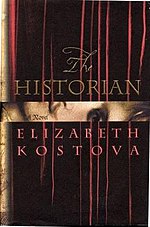
The Historian

Title: The Historian
Author: Elizabeth Kostova
Year: 2005
Genre: Fiction/Mystery/Thriller
Rating: 2

If we're sick of vampires, that's only because we've got a reason to be, after Twilight and "True Blood" and the absolute cultural obsession with the occult. But every once in awhile, there's an intellectual who focuses on the subject, because underneath all the pop culture, it is an interesting one.
Elizabeth Kostova's debut novel The Historian preceded the undead craze by a few years, and took a very intellectual, analytical approach to the legend of Dracula. Bram Stoker originally handled the 15th century Romanian myth in his 19th century novel, but Kostova reimagines the story with a gracious amount of research and historical context. The novel is wide-spanning, painting a picture of two different worlds-- tense Cold War Europe and the tenser 15th century Ottoman takeover.
Although it takes awhile to fall into the structure of this novel, it soon flows easily between your fingers, like intertwined threads. The story follows a young woman (who remains unnamed throughout the book) as she gradually discovers her father's deep research on Vlad Tepes, better known as Vlad the Impaler, better known as Dracula. Her father, Paul, haltingly tells her the flashbacks to 1954 of his unfortunate adviser at a New York university, Bartolomeo Rossi, who started him on this road before disappearing without a trace. From there, Paul meets a young Romanian woman named Helen who accompanies him in his search for the undead, legendarily cruel Dracula. Their road takes them across Eastern Europe, from Istanbul to Budapest and and back, and the truth becomes darker and more bloody with the more they discover.
The chapters of Paul's tale are interspersed with the tale of his daughter, who becomes caught up in his research on the Transylvanian vampire, and the occasional document or letter from Paul or Rossi. The novel is broken up into three parts, but there are no real cliffhangers or time jumps separating the parts, which is reminiscent more of a term paper than a novel.
Mrs. Kostova, an American, has certainly done her research. The novel is the work of ten years of her life, and her meticulous writing and composition shows in the style and gravity. Each of the places mentioned is real enough to touch; one can almost feel the sun in Istanbul, hear the voices of the singers in Bulgaria, and feel the wind off of the ominous Lake Snagov. She mentions dozens of scholarly papers and works on Dracula in as many languages, some of which are lost or fragmented. The dedication of the novel relates that Mrs. Kostova first gained interest in the character from the tales that her father told her of the Eastern European legends of the undead.
The novel could easily have been a hundred more pages. There is a lot of material here, and despite the 642-page length, it feels condensed. At the beginning, we're eased into the background, like lowering oneself slowly into hot bathwater, but toward the end, all of the important plot points happen in the space of about twenty pages. It's actually fairly disappointing. The whole novel is a great story, with so much to interest, and whole cultures that have been shut off to us by the Iron Curtain for years. Kostova does not sidle around the issue of language-- she includes snippets of Hungarian, Turkish, Bulgarian, German, French, and Romanian, making an almost cheeky point about the state of American linguistics (as the old joke goes, what do you call someone who speaks one language?). Fortunately, she smoothly provides translation that makes sense for us, and the novel never comes unglued with unexplained mysteries.
Oh, wait. The only mystery she doesn't touch is how Dracula became undead in the first place.
To a degree, it's the novelist's job to delve into mysteries and secrets that have been close-guarded, but in this case, it seems more respectful than anything. She's created a whole tale around a foggy legend, and it only seems fair that she leave one mystery to keep the original tale interesting and gripping to future generations.
The book largely sticks to its story without too much philosophizing, but she can't help but stray into the realm of deep thought at the end, when a character poses the question of good versus evil. Good is not perfectible, but evil is, so why not strive for the thing that you can make perfect? Temptation, darkness, reason, and inner conflict... it all concatenates in this one line, a tear in the neat fabric of the mystery before returning to the plotline. It shows an admirable amount of restraint-- this book alone could merit a term paper on the essence of life, death, evil, cruelty, et cetera, but Mrs. Kostova's primary goal is to tell the story. Like the great novelists, she leaves it to us to draw our own conclusions from what she's written.
After all, she is only the historian.
This fabulously dark work is available on the Kindle for $9.99, or from barnesandnoble.com for $6.28. I had to wait a long time to get it from my library because a lot of people want to read it, so I would advise buying it, because it's worth a couple of reads.

Tuesday, March 20, 2012

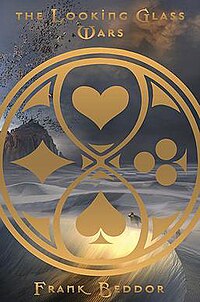
The Looking Glass Wars

Title: The Looking Glass Wars
Author: Frank Beddor
Year: 2006
Genre: Fiction
Rating:  2


Playful, charming, mischievous, and endearing, Frank Beddor's takeoff on the classic Alice in Wonderland has taken the world of fairytale adaptation to another stratospheric level. Over the past few years, we've seen an increasing fascination with Lewis Carroll's magical world of caterpillars, card soldiers, singing flowers and the Red Queen-- Johnny Depp as the Mad Hatter, SyFy's miniseries, and the disturbing video games, among numerous others-- with each instance growing a little more dark and twisted. The Looking Glass Wars is a step above the others, with Beddor imagining Wonderland as something else entirely.
We first get the idea that something is wrong in the introduction, with a tempestuous Alice-- or Alyss, as Beddor spells her name-- throwing the draft for Alice in Wonderland back into the face of Charles Dodgson, the real name of Lewis Carroll. From there, we learn that Alyss is the last of the Hearts, the rightful rulers of Wonderland with extremely powerful imaginations, and that her foul aunt Redd has gruesomely murdered her father and mother and exiled her to Victorian England. Alyss's story is populated by familiar characters, twisted into far more fallible, unrecognizable people (the Mad Hatter becomes Hatter Madigan, the White Rabbit becomes the tutor Bibwit Harte, and the caterpillar becomes six distant oracles) who form the Alyssian Resistance, fighting against Redd for the future of Wonderland.
And yet, Beddor has kept the intrinsic playful nature of the original book. In a dry, acidic humor, he makes jokes out of Redd's cruelty, and the grimy streets of Wondertropolis are filled with whimsy. He has created all sorts of interesting details, even down to the favorite foods of the Wonderlandians. Wonderland also becomes one nation in a world full of ones just as outlandish and interesting; Boarderland lies across the vast desert, and suddenly, we're confronted with a whole world.
Alyss herself is an interesting conundrum. At first, she spends much of her time on Earth trying to preserve her royalty and memories of her home, but after dozens of people have told her that she is making all this up, she begins to wonder if she indeed has. Her imagination fades away, and she becomes an embarrassingly normal young woman on the brink of marriage when she is suddenly dragged back to Wonderland. All of a sudden, instead of the dreamy little girl in a white frock, she is a full-grown woman with real danger all around her.
The redesigning of Redd and her servant the Cat (a particularly unsavory creature twisted from the Cheshire Cat) is clearly the one that took the most work for the author. He has changed every aspect of the nearly impotent Red Queen of the book and movies, retaining only her affinity for scarlet and her catchphrase, "Off with his head!" Instead of having cronies do all of her executions for her, she has a delightfully grisly dress made of carnivorous vines that eats people that cross her. She also has a wicked pleasure in patenting products designed to cause misery with tacky names, which only adds to the charm of the book.
Beddor has created a spectacular world that is impossible to be uninterested in. Even from the first few pages, the story draws us in and grips us tightly until the end. Fortunately for us, this is not the only book-- there are two more in the series (Seeing Redd and Arch Enemy) to complete the full tale of Alyss.
On a side note, one of the more interesting choices that Beddor made was to include illustrations. I wouldn't term this novel as for children-- maybe for teens, but no one under 14 or so-- but there are four pages of full-color illustrations, even in the paperback. They're notably Burton-esque, with sketchy lines and dark looking characters, not at all definitive of the whimsy of Alice in the past. I prefer to imagine the characters in my own mind, so I skipped them until the end, but they're a bemusing addition.
The Looking Glass Wars is definitely worth your time. You can pick up an eBook copy for $8.99, or a paperback for as low as $3.22 on Amazon. Although I only gave it a 2-- just because it's not the sweeping, meaningful tale that other novels are-- I usually read once a year or so, so I'd recommend buying it if you can. I actually own all three, as I got started when they were first coming out.

Tuesday, February 28, 2012

Fall of Giants

Title: Fall of Giants
Author: Ken Follett
Year: 2010
 Genre: Historical Fiction
Rating: 2


Ken Follett is a giant himself- with books like World Without End and The Pillars of the Earth behind him, he could write children's books for the rest of his life and still be read. Fall of Giants does not disappoint. In classic Follett style, he lays out a historical context and creates characters within it that capture our hearts.
The book begins in the glory days before World War I, on the day of George V's coronation in Westminster Abbey. That's only peripherally important to us, as the readers, though: that same day, Billy Williams goes down into the coal pit in Aberowen, Wales. Follett's depiction of a tiny, early 20th century mining town is captivating and evocative; every detail is as vividly accurate as usual, bringing every essence of the miners' desperately ordinary lives to bright color.
Fall of Giants focuses its story on eight incredibly different individuals-- Billy and Ethel Williams from Aberowen, the English nobility Maud and Fitz Fitzherbert, the German dignitary Walter von Ulrich, the Russian peasant brothers Grigori and Lev Peshkov, and the American political aide Gus Dewar. Each of them brings a different perspective to the torrent of disaster that is the oncoming World War, and Follett brings their doubts, worries, and fears to life in strikingly human situations.
The book moves forward in sections of time, which is an interesting change from the usual chapter-by-chapter setup for books. Follett titles a chapter with the date that it occurs, such as "July 1914", and under that numbers sections that either alternate between characters or time on the same character. With this setup, we don't forget about characters in the gaps between their segments, and we aren't constantly flip-flopped between vignettes of the different times and places.
However, the book has failings as well. Follett, while gripping and evocative, has some sort of visceral fascination with the taboo in time-period cultures, and gleefully describes it to awkward readers. In one scene, he describes a certain woman giving a man a surreptitious handjob in the back row of an opera. In the first chapter, he describes Billy's woe at his poor sexual development. These details are part of the reality of his characters, but there are copious amounts of them, and could be limited without being too terribly missed.
Some of the sentences in Fall of Giants seem a little choppy as well. As the book is told in third person, the necessity for simple language for simple characters is eliminated, but in some of the cases, it remains. At one point during a section of Billy's story, I was horrified to be reminded of that travesty scribbled by Stephanie Meyer in a paragraph that plodded, "Billy did this. Billy did that. Billy wasn't sure of this." It happens to the best of us, but editing can usually catch most of it.
Despite some small failings, Fall of Giants is still a wonderfully intimate, moving depiction of the true human effect of World War I. We see the desperation of friends caught between warring nations, the destruction wrought on families and cities, and the truly uncontrollable nature of human nature in politics. At the end, we see Germany moving toward the desperation that placed Hitler in power, and the chaos wrought on Russia by its own revolution. Fortunately, this is only the first in the new Century trilogy, so more of this gripping series is yet to come.
Also in classic Follett style, Fall of Giants is a fantastically long read-- around 1000 pages-- that doesn't feel all that long. I ripped through that thing in about 10 days, reading at breakfast, dinner, and coffee. This book is pretty new, so it's pretty pricey, but definitely worth your time. My library had a copy, but if yours doesn't, see if you can get it on your Kindle. It's $18.99 on the Kindle, which seems expensive, but the hardback in real life is $34.00, so suck it up and get the eBook. If you can find the paperback- which I could not- it's supposed to be $16.50, so that's a better buy if you can. However, I will probably read this book again, so I'd like to have it on hardback someday if it gets cheaper. I'll keep my eyes glued to the clearance shelf at B&N.
That's all for me today. As always, keep reading, you pageturners.

Tuesday, December 13, 2011

The Devil in the White City

Title: The Devil in the White City: Murder, Magic, and Madness at the Fair That Changed America
Author: Erik Larson
Year: 2003
Genre: Historical non-fiction
Rating: 1


If you could define a masterpiece, this might be a good example.
The Devil in the White City, a national bestseller, is a stunning portrait of dark and light America in the 19th century, a picture of realism and idealism. Very often, we tell our children the best stories of America and focus on the beautiful and cheerful and positive and neglect the shameful and petty. These disillusions are not dispelled as we grow up, and we remain blithely unaware of the dark past that many of our most beautiful places have. In order to interpret our future, we have to know our past, and The Devil in the White City is an enlightening piece of our own history.
Larson tell the story of the 1893 Chicago Columbian Exposition- The World's Fair- in enrapturing, grisly detail. Beginning with the designation of the location and Chicago's determination to have it, he outlines the political winds of the time period and the reasons for why it was in the Midwest instead of the obvious choice, New York City. Larson focuses on the main architect of the fair, Daniel Burnham, who is a household name in Chicago even today, and follows his struggles, frustrations, and ultimate triumph in the legendary World's Fair.
However, Larson also tracks a nightmare in a parallel story. The tale of H.H. Holmes, a psychopathic murderer lost to history, is interspersed with the larger tale of the Exposition. In grisly, meticulously researched detail, Larson follows the quiet threads of the man who murdered at least nine people and possibly more than fifty over the course of five years. Larson paints a dark human picture, leading readers down a dark path of either madness or sick, disturbed thought.
You thought you knew history. But Larson takes his readers through their own history, rediscovering details that they thought they had forgotten and clearing away foggy parts of that time period as he goes. I don't want to spoil too much of the story, but did you know that Aunt Jemima's pancakes had their start at the Fair?
Perhaps the most astonishing part of this book is the historical accuracy. Most of us slog through history textbooks in high school and college and then never read another one until our kids ask us for help with homework, but The Devil in the White City reads like an enrapturing novel. With the skill of a historian and journalist, Larson retrieves hundreds upon hundreds of quotes from the annals of history, filling them in like dialogue. His sardonic sense of humor and irony also keep the novel funny, despite the dark overtones.
So even if you didn't think you knew history, this book is worth the week it takes to read. It's not long, and you'll rip through it. It's a little older now, so I got my copy at a consignment store for $2.00, but you can get your copy at Barnes and Noble for $16.95 or on eBooks for $9.99. And trust me, it's worth buying, because you'll read it two or three times. Then tell your friends to read it. Then recommend it to your coworkers. And so on.
Anyway, it also makes a great Christmas present. Merry Christmas, everybody!

Monday, April 4, 2011

Aztec

Title: Aztec
Author: Gary Jennings
Year: 1980
Genre: Historical fiction
Rating: 3

Okay... here we go. Prepare for a deluge.
Aztec is a wide-spanning, incredibly detailed, indefatigably researched piece of historical literature, regarded as one of the most accurate in current existence. Gary Jennings is a master story teller- in Tlilectec Mixtli, he has created an incredibly human character who relates his life in stunning detail. And throughout his "abnormally long years", we come to know Mixtli intimately and, to borrow from Cummings, "laugh his joys and cry his griefs".
Aztec opens with a letter addressed from Bishop Zumarraga of Mexico to Emperor Don Carlos I of Spain, placing the book's year at 1529. The priests of Mexico City (inside the desecrated House of Song of ancient Tenochtitlan) press an old Mixtli to tell them completely the story of his life, which he happily does. After all, he is a "word knower"- a scribe.
Mixtli begins the story of his life at birth, and from that moment on, he leaves out nary a detail, and granted the native peoples' penchant for loose sex, it becomes awkward in many places. However, Jennings's research on the original Nahuatl tongue is impeccable- most of the terms that Mixtli uses for cultural objects are first listed in Nahuatl and then in English. Reading the language became a little wearying after awhile- I couldn't take in too much of this book in one sitting.
However, the story arcs are beautiful. Mixtli's voice is amusing and amazingly contemporary, making fun of many aspects of Mexica culture, other native peoples, and the Spanish priests' hypocritical behaviors. He often states that he was "heathen" before, but under the false words, I could detect a pride in his original faith in Tonatiu, the sun god. He is a little ashamed of many of his people's violent traditions, such as the Flowery Wars (wars fought purely for the purpose of obtaining sacrifices for the gods) or the sacrificial rites of Xipe Totec.
However, we also feel Mixtli's pain at losing those he loves. I wept with joy when he married Zyanya, Always, and had their daughter. I also shed tears when he lost her in the floods of Ahuitzotl. I was appropriately shocked in the court of Jadestone Doll (which I won't detail here). And when I found out the fate of Tzitzitlini, I wept harder than before.
Altogether, this book is a little too long. Don't get me wrong- it's beautifully written, and covers an incredible expanse of time, from the old Motecuzoma's rule until the fall of Tenochtitlan, in breathtaking detail. Everything, from the farthest south of the Mexica's rule to the history of Texcoco, is told from beginning to end. And although the information is told incredibly and there is so much of it, I began to lose interest about when the floods ended.
Also, the detailed amount of sex in this book is rather R-rated. For most indigenous cultures, sex is a common topic, but Mixtli is promiscuous, to say the least, throughout his bachelorhood; there are many sex scenes, and Jennings describes almost all of them from beginning to end. From his incestuous relationship with Tzitzilini to his loving marriage with Zyanya, Mixtli certainly sowed his wild oats. Now, I don't personally have a problem with sex in books- as it's a necessary part of the story- the number of scenes was just unnecessary (especially the one with Cozcatl). That's just a personal preference, though.
There are a number of books in the Aztec series, and although I haven't read all of them, this is a great one. Unfortunately, Mr. Jennings passed away in 1999, so there won't be any more, but this is an enduring work that he will be remembered for. I enjoyed it immensely.
I picked up my copy from the local library, but I had to renew it to finish it. I think it costs around $20.00 at B&N, but it's probably cheaper at your local Bookman's or Hastings. So, grab it from the library if you can. It's a good, lengthy read.
That's all for me today. Keep reading, my dear pageturners.

Tuesday, February 1, 2011

Water for Elephants

Title: Water for Elephants
Author: Sara Gruen
Year: 2006
Genre: Historical Fiction
Rating: 2


A five-list bestseller, Water for Elephants has been on the lips of many readers around the world for about five years now. Previously almost unknown, Sara Gruen is now one of the world's top authors, propelled to the front of her field with her gritty, tasteful research in her compelling piece about the traveling circuses of the 30's. From beginning to end, her perspective through the eyes of her characters shows us a world behind the brightly colored circus tops that we all thought we knew.
Beginning in 1931 at Cornell University, we follow Jacob Jankowski, a young veterinarian who loses his parents to a brutal automobile accident. He wanders off along the train tracks and manages to hop aboard what he abruptly discovers as the Benzini Brothers Most Spectacular Show on Earth- a train circus. Through Jacob's eyes, we find the dark world behind the canvas and the animals, showing us the gruesome and heaving underworkings of circus, from the unscrupulous Uncle Al to the aggravating August to the entertaining Kinko. Jacob becomes deeply involved in the circus as its veterinarian, and eventually the collapse of the circus itself.
The story of the Benzini Brothers is interspersed with a frame story, which involves the ninety (or ninety-three) year old Jacob in his nursing home, waiting for his family to take him to the circus that is in town and having all kinds of amusing interactions with the nurses and other ancient inmates. However, I found myself hurrying through those sections to get back to the real story, where Jacob eventually meets Rosie. Who's Rosie? Well, look at the title of the book and surmise.
Water for Elephants not only engrosses us in a world that we are all fascinated with, it engrosses us into its characters. At the beginning of the book, Jacob spends paragraphs whining about how he is probably "the oldest male virgin on the face of the earth." However, as the story progresses, we start to see him grow up before our very eyes, changing into the mature man that we all want him to be. Not to mention the other characters- Uncle Al's fascination with freaks, August's strange mood swings, Marlena's personality quirks, and Kinko's guarded personality. Every single one of them not only becomes present and active, but very, very human.
There are some sections of the book that I wouldn't hesitate to term as awkward, if not outright uncomfortable. Water for Elephants is definitely not a book for children under fifteen, especially boys- it requires a certain level of maturity to read. However, I concur with Gruen's descriptions of what occurs; it helps to develop Jacob's character into maturity, if a little awkwardly. There are a few scenes that made me squirm, just because I am a visual reader, and any descriptive words immediately leap into my mind as images. Let's not talk about Barbara, though.
There is a movie coming out soon that should be fairly PG-13, though, so if a fifteen year old wants to know the story, that should be pretty clean (I'm pretty disappointed about who they picked for Marlena, though. I like Reese Witherspoon, but she doesn't fit the description at all), and I am actually looking forward to seeing Robert Pattinson actually act. It comes out on April 22, 2011.
Water for Elephants, as I mentioned before, is a really, really popular book, so almost any book store should have it. If not, it should be available online for fairly cheap. I'm actually going to call paperback on this one; the paperback copies are surprisingly durable. They're actually running for around $14.00, too, so that's just a bonus.
Anyway, that's it for me today. Happy reading, my dear pageturners!